
After five years of working with a quadraphonic setup I have some opinions on where I would start over if I had to. I will make this the first post of a three part series detailing what I believe is central to actually enjoying working in quad. There are many sources of info for setting up a quadraphonic setup. Some of them are pretty useful for understanding the basics. That is NOT what I want to cover with these posts.
I want to dive in deep.
The first post will be Sources. The second post will be Spaces. The last post will be Routing. These have repeatedly come to bear when working with a quadraphonic setup and are more central in understanding this unusual beast.
SOURCES
At first you throw everything at quad. Sound Effects. Industrial sounds. Psuedo surround stuff. Out of everything I have tried there seems only a couple sources I seem to want to hear on a regular basis. That would be where I start my personal use for quad.
Do you plan on using quad for entertaining others, or primarily yourself?. I find most who I have regularly listen to quad, can find it overwhelming. Usually after ten to fifteen minutes their ears get fatigued. So what creates less fatigue and also inspires interest?
Gentle use of the basic effects seem to yield the best results for long periods of listening. Four hours or more. Basic tremolo, phasing, flanging and of course reverb and delay. Also all filter effects, but more ‘gentle’ sweeping. What do I mean by ‘gentle’?
This is like salt with food, add as much as you want to your own taste.
Ok, so what sources do I run through those effects?
My most effective sources are long drones. Usually in either a minor or major key. Again salt to taste. You might be tempted and try all sorts of complicated waveforms and you might find some that work great, but other then the standard waveforms, I found strings and tubular bell sounds are the basic bread and butter that really shine in quad.
Again, I am working with listening periods of four hours or more. It is not unusual for me to go for six to eight hours at a time.
I can easily evolve these sounds with basic midi generators and record the midi streams along with the four tracks of audio in Cubase.
I can then playback the four tracks through the four speakers and or change their listening positions to find the same recorded piece sounds different. The GREAT thing about quad is that you can change your ‘space’ based on what you have recorded. And it WILL change the space. I find a fun exercise is to start with a bass sound. Assign it to one speaker/corner then add a midrange drone to the opposite corner then bring a higher frequency source to a different corner and then usually a choir type sound to the remaining corner. Find a sweet spot with all four voices, then rearrange the order and see if you still like the ‘new’ positioning and or does it bring the need to alter the sources? This can literally go on forever, so if this does not sound interesting then quad may not be for you.
I would say most people are fine with a mono sound and don’t even need stereo.
But you are not reading this because you are most people:)
I am inspired by Brian Eno’s music for airports. I have often found myself starting with it playing in one of the four corners and slowly bringing my own sources in then slowly move it out.
I also like to use distortion! My Jourgansen and Reznor influences get put on display regularly. But I like subtle too. Too much is too much. This is where I usually end my listening/recording period. Sometimes it’s fun ‘destroying’ the pretty sounds and then maybe bring a few back in for sonic reflection.
Ok, here’s what hardware fiends have even bothered reading this far into this post for.
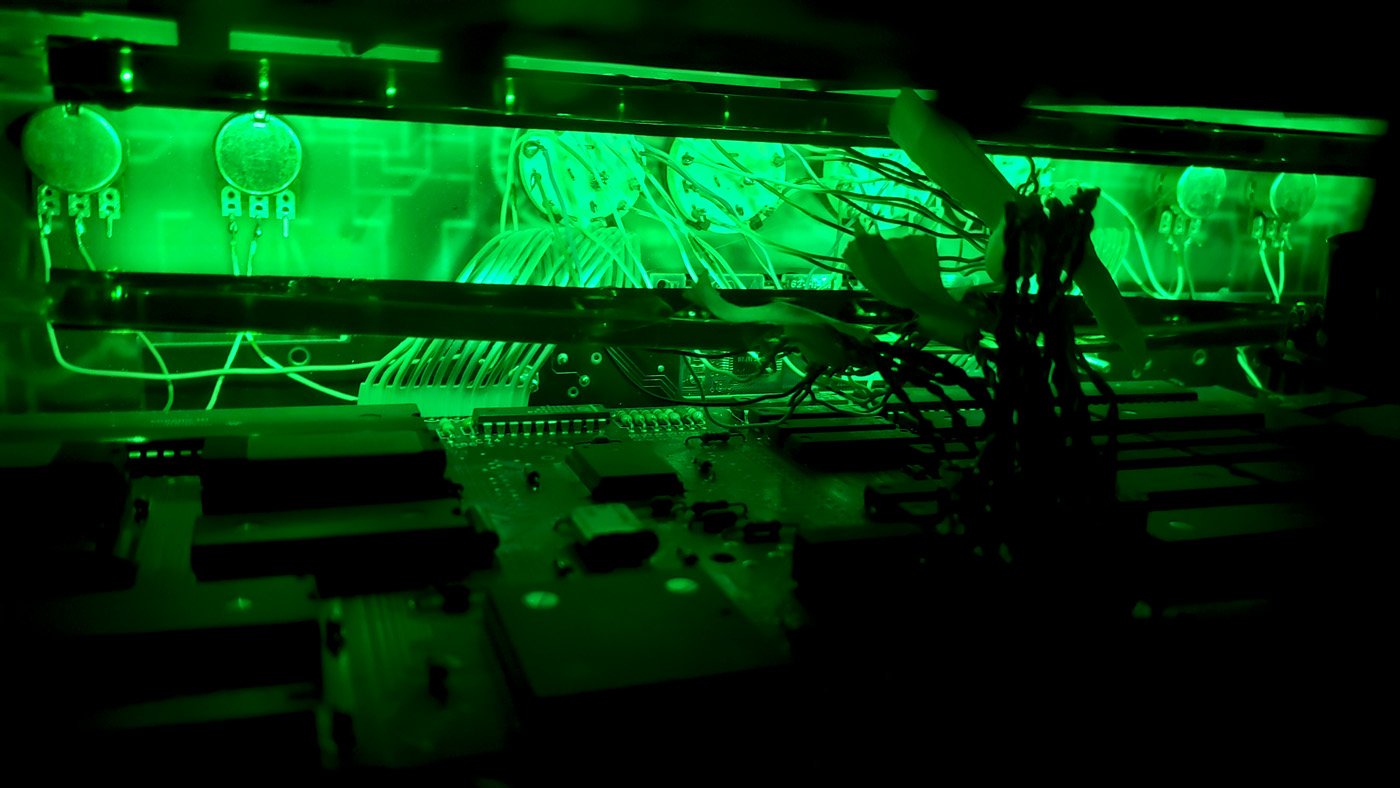
My go to source for my evolving drones is my BPRO/1. I absolutely love this beast. I originally had MatrixSynth.com post this back in Feb 2011.

I heavily modified this Emu Proteus 1. I bypassed the VCA’s and added a selector switch matrix that is controlled by the four 12 position switches on the front panel. I use four separate audio channels. They influence one another and the four switches effect each of the four channels. It can be a bit distorted and chaotic depending on the preset selected. It’s this ‘feature’ that is intoxicating to me.
I feed two of those audio channels through the Electrix MoFx sitting on top. I use the tremolo effect and delay effect with most presets, the flange and distortion effect less so, but I love these analog effects modules.
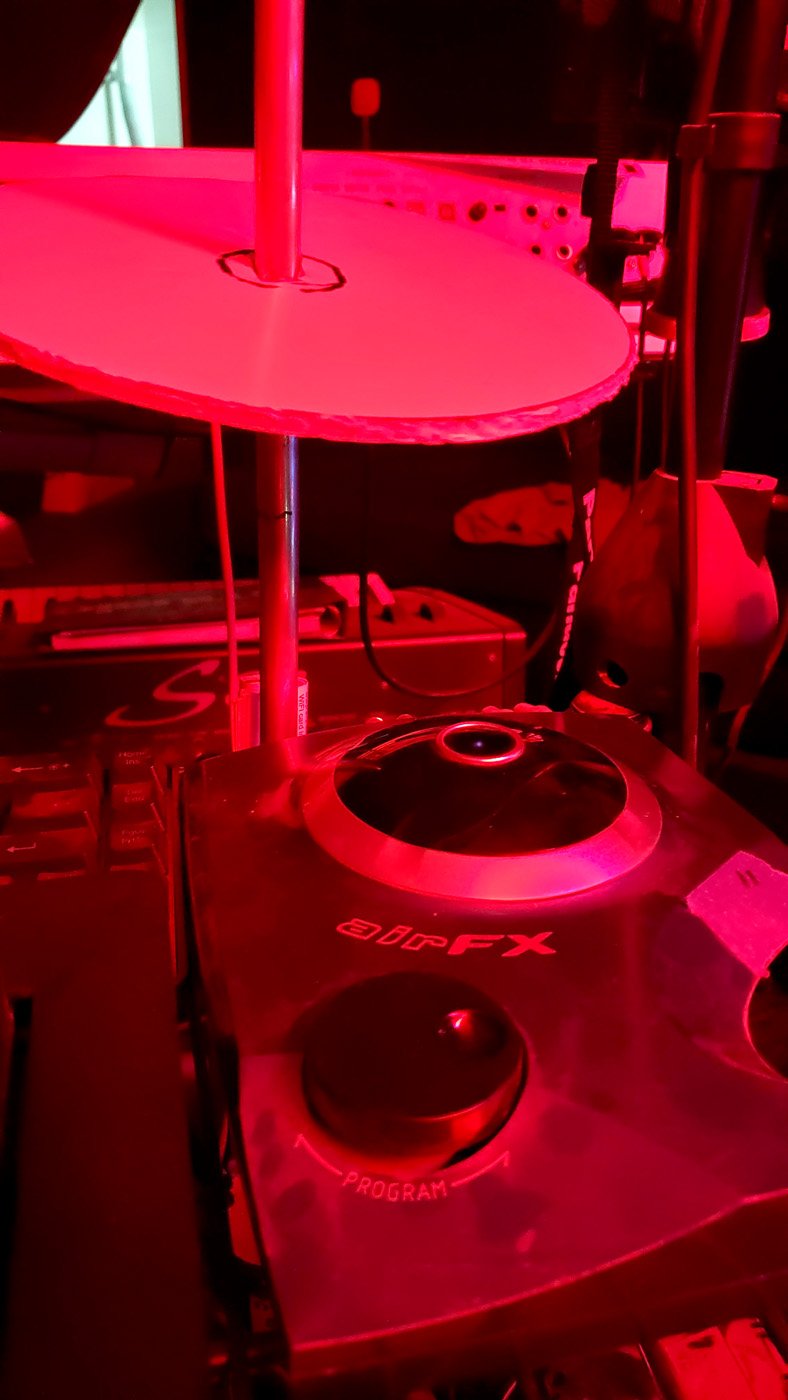
The other two audio channels get fed into this Alesis AirFX. I added a rotating disc above it allowing me very ‘gentle’ filter sweeps. The disc rotates once per minute. I can adjust the depth of the frequency sweep by physically moving the disc height up or down. The flatter the disc sits the less depth of the sweep.
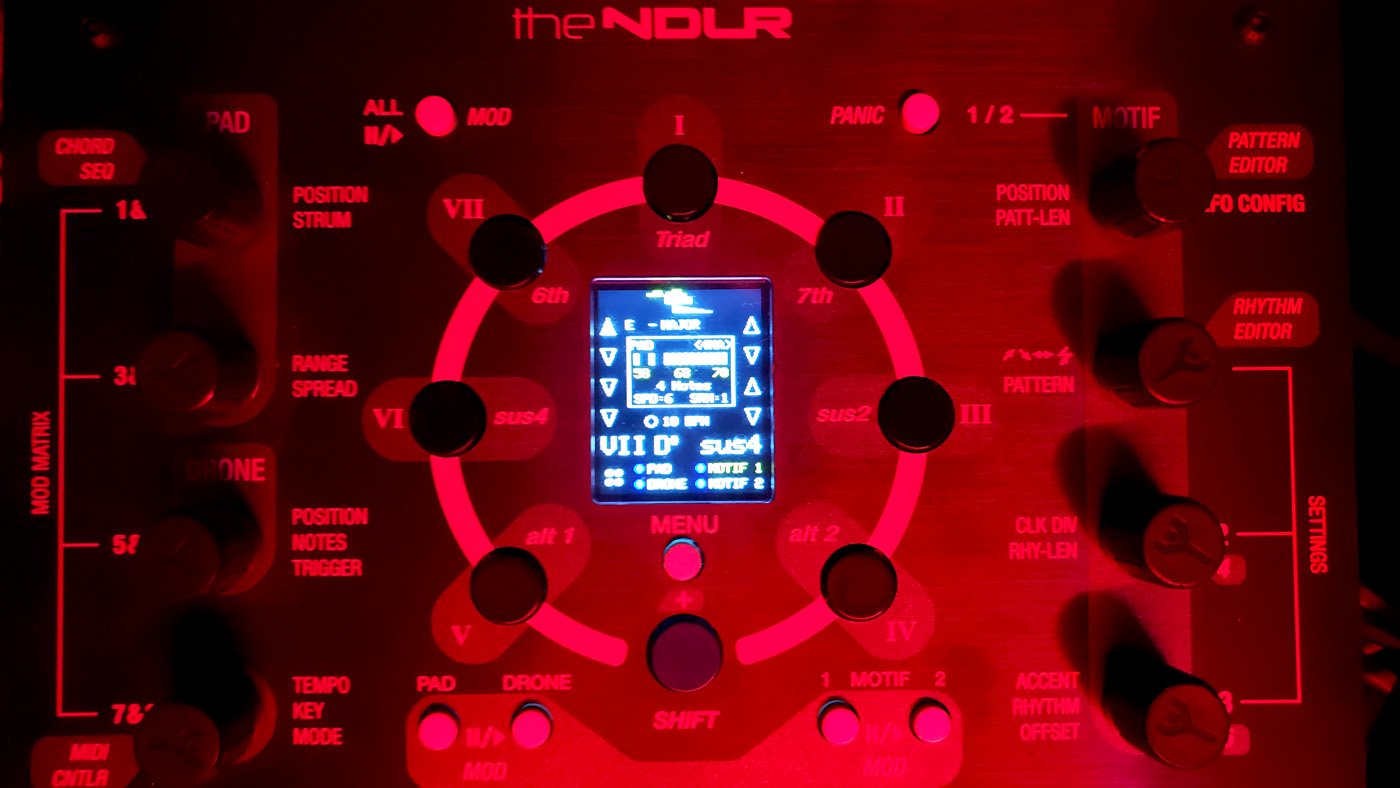
Controlling the major and minor keys into the BPRO/1 is the NDLR. Set at 10BPM and fed into the general Midi input. This allows me a very convenient way to control the overall mood for hours and hours at a time.
Other sources I use are the Elta Solar 42f, the Lyra 8 and my custom Folktek rig. It is not uncommon for me to use a single channel from all of these sources and round robin them through all four speakers. Speaking of speakers, next post, in this series, I will go into depth about my space and my speaker setup.